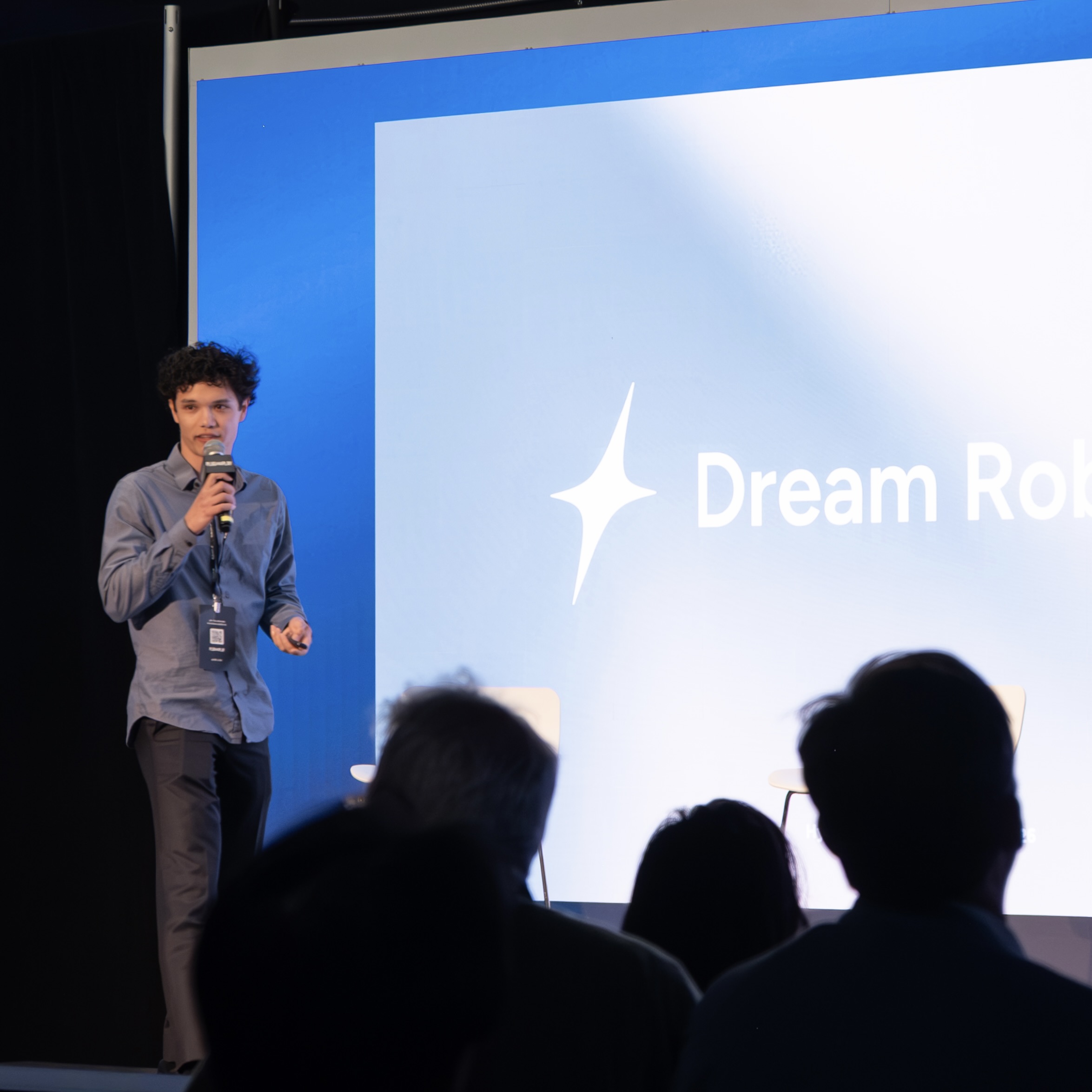
About us

Dream Robotics is led by roboticists who have shipped real hardware, trained real policies, and built the data systems that connect human skill to deployed robots.

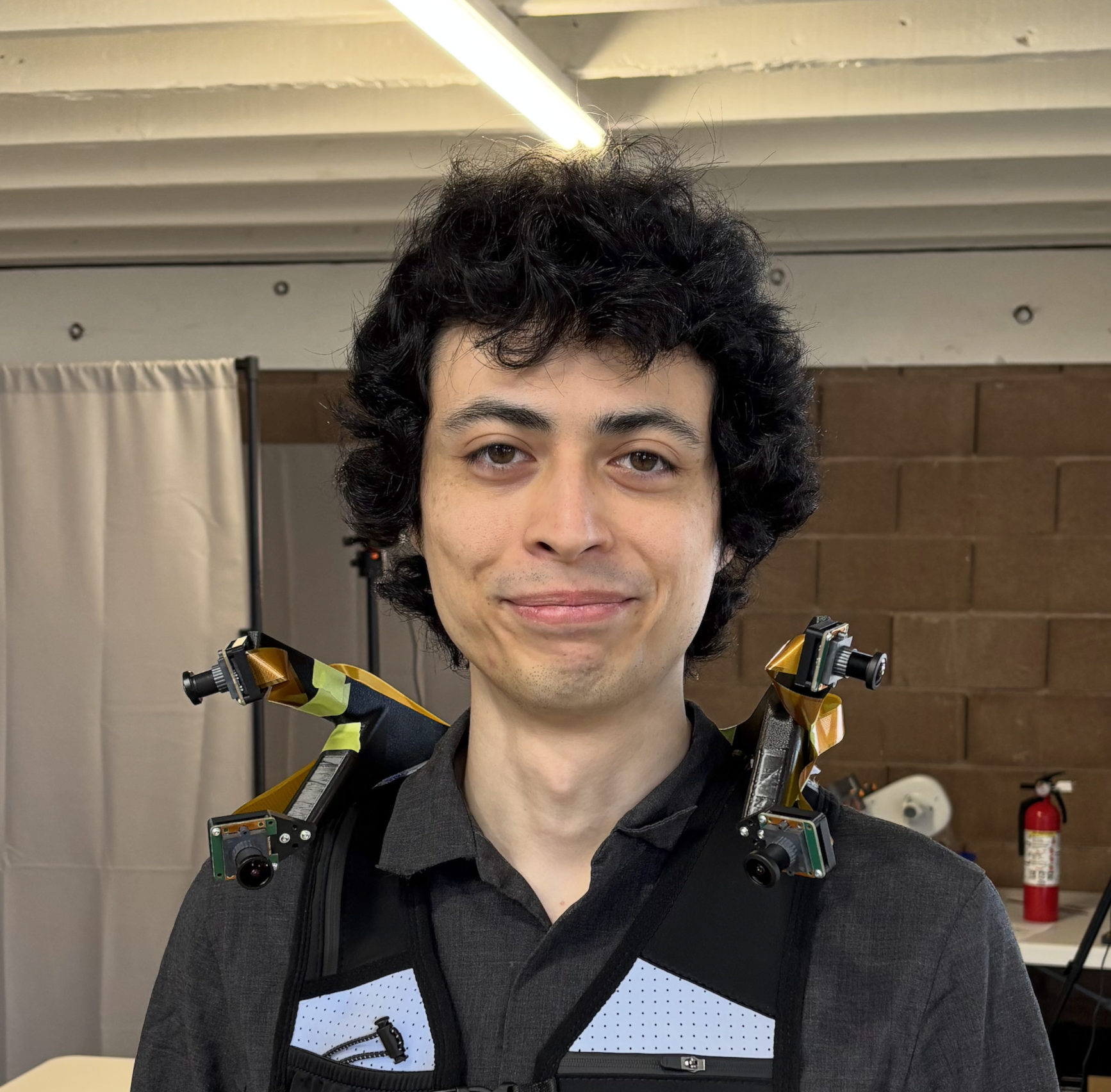
Nathan Kau, Dream Robotics founder

Nathan Kau

CEO. HW/SW co-design, robot learning, and full-stack robotic systems

Nathan develops full-stack robotic systems spanning HW/SW co-design, imitation learning, and reinforcement learning.

From 2020 to 2021, he developed robotic exoskeletons to help older adults regain mobility at Google X. In 2022 he moved to Tokyo, where he developed indoor delivery robots for Woven by Toyota, training AI for indoor navigation and perception. After moving back to Palo Alto in late 2024, Nathan co-founded Last Feet, where he designed, built, and trained a heavy-duty quadruped robot for package delivery from the ground up.

During his BS and MS at Stanford, he created Pupper, a family of open-source robot dogs featuring lifelike RL locomotion and VLM-powered behavior and personality. More than one thousand Puppers have been built worldwide, and the project has been covered by The Verge, TechCrunch, ABC, NBC, and more. During his master's, he created CS123, an undergraduate robotics course co-taught by industry experts featuring intensive hands-on labs centered around Pupper as a learning platform.
Gabrael Levine, Dream Robotics founder

Gabrael Levine

CTO. Imitation learning, dexterous reinforcement learning, and embodied AI

Gabrael Levine builds robots that learn to act by watching people.

At Tesla he worked on Optimus, developing perception and imitation learning systems that enabled the robot to learn household tasks from video demonstrations. He also led Optimus's first reinforcement learning effort for dexterous manipulation, bringing policies from simulation to a tendon-driven robotic hand, and drove development of the hardware and data infrastructure for large-scale human demonstration video collection.

Earlier, he built full-stack systems across algorithms, software, and hardware design for the Pupper quadruped and Rhea, a wheeled biped. On Rhea he trained reinforcement learning locomotion, transferred it to hardware, and produced a viral demo pairing LLM dialogue with locomotion.

At Stanford he worked in Professor Fei-Fei Li's lab on embodied AI and contributed to BEHAVIOR-1K, a benchmark of realistic household tasks. He is a Hackaday Prize finalist and the inventor of U.S. Patent 11,639,746 for a planetary-geared actuator.

Alex Hattori, Dream Robotics founder

Alex Hattori

Chief Engineer. Actuators, manufacturable robots, and production hardware

Alex received his master's and undergraduate degrees from MIT, where he worked in the Biomimetic Robotics Lab. There, he helped design and manufacture the MIT Mini Cheetah and MIT Humanoid robots and their novel actuators, which enabled the proliferation of low-cost robotic actuators used in nearly all modern robots of the AI era.

After graduating, he helped bring an early-stage robotics startup from concept to mass production by leading R&D and actuation development for novel low-cost mobile manipulator robots.

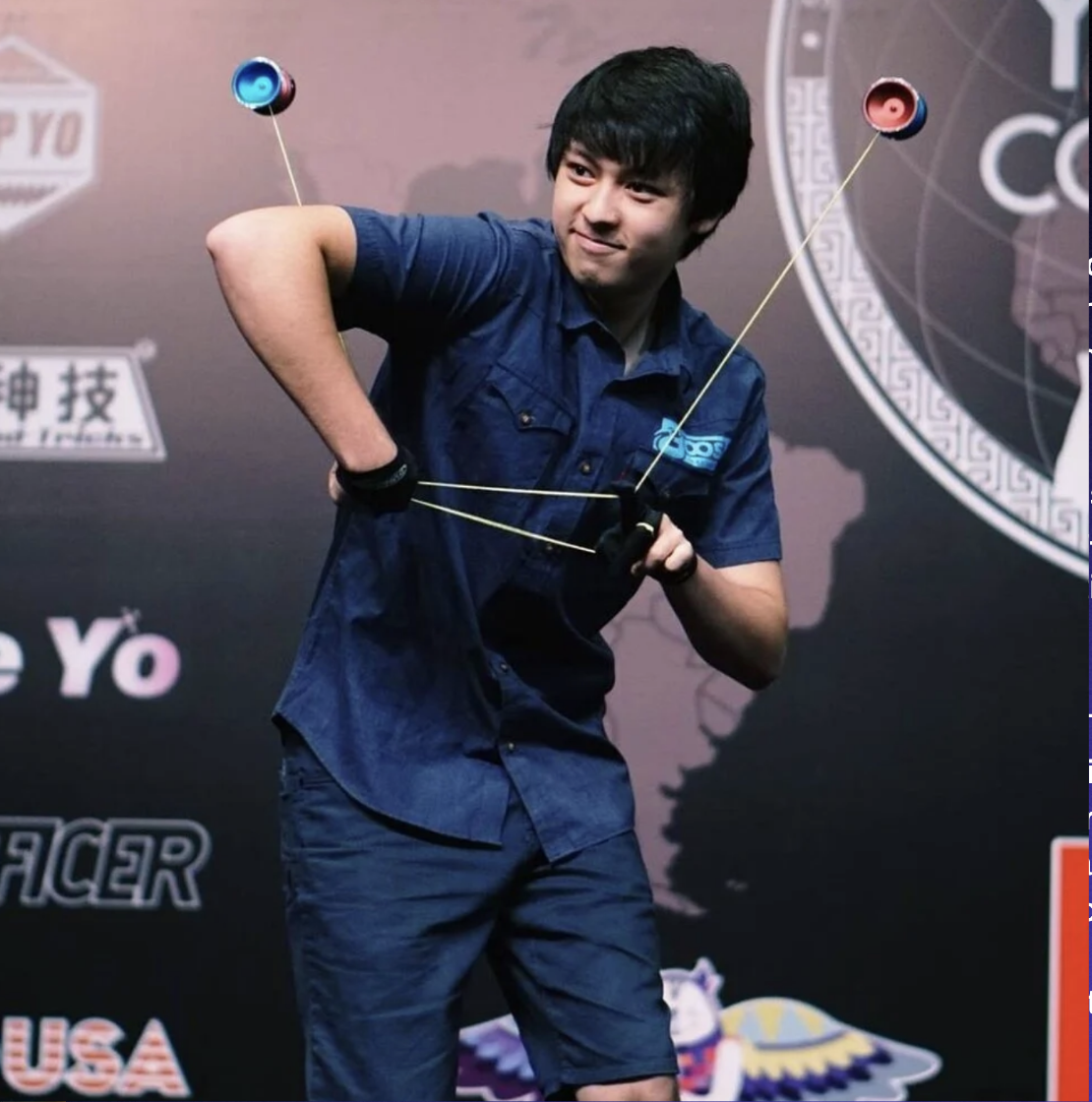
He has also worked on projects ranging from eVTOLs to consumer products to last-yard delivery robots. Outside of his career, he has captained Uppercut on BattleBots and competes internationally in yoyoing, where he is a 10-time U.S. National Champion. He continues to learn and build state-of-the-art robots in his free time, including Goblin, a humanoid robot, and Stride, a wheeled bipedal humanoid robot.

He is excited to start building general-purpose robots for the home that could have a huge impact on people's everyday lives.